Understanding Stem Cells & Exosomes
The Foundation of Regenerative Medicine
Regenerative medicine is an evolving area of healthcare that explores how naturally occurring biologic products may support the body's normal repair and maintenance processes. Researchers continue studying these biologic components to better understand how cells communicate, respond to injury, and help maintain healthy tissue function.
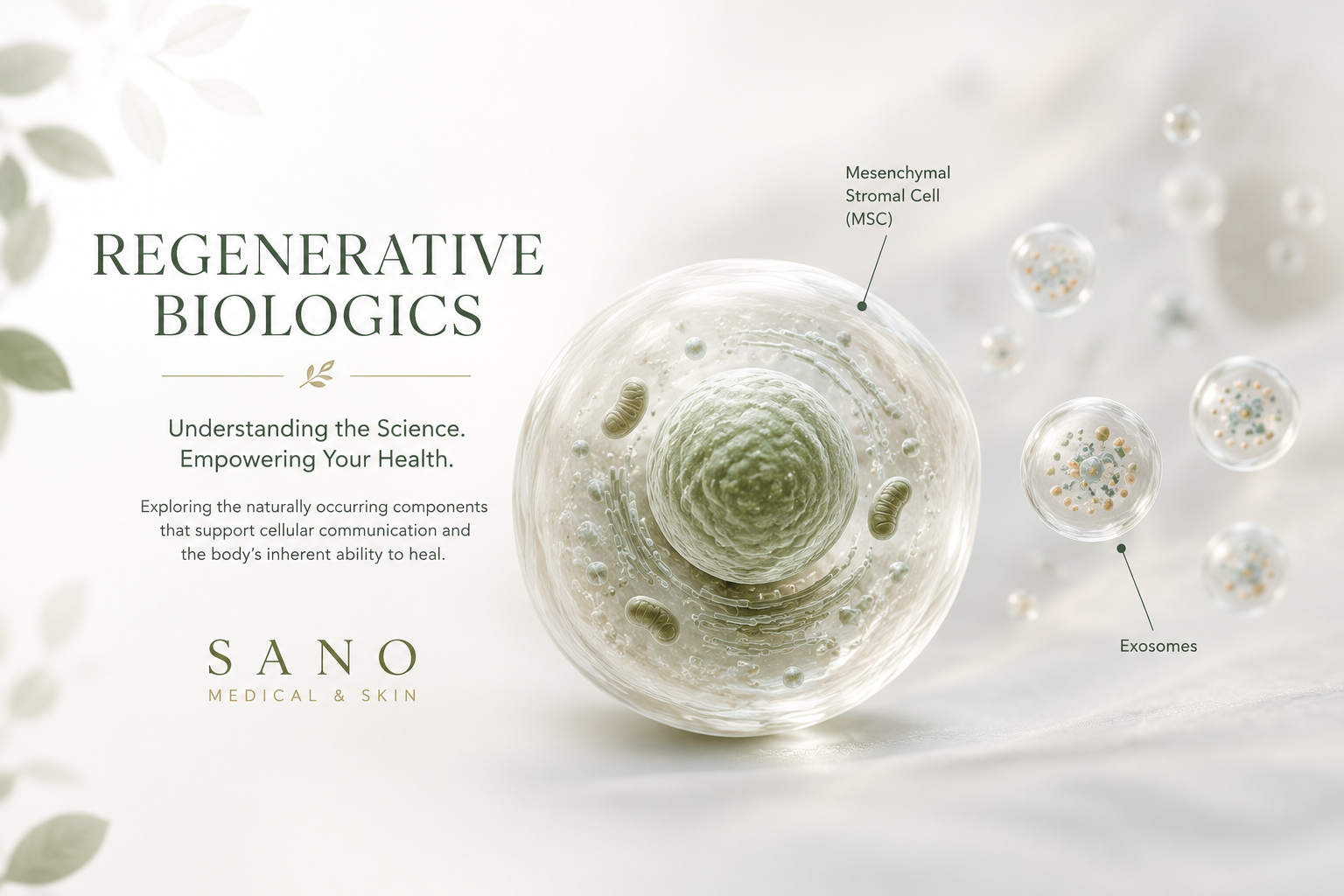
Among the most commonly discussed biologic components are mesenchymal stromal cells (MSCs) and exosomes. Although these terms are often mentioned together, they are not the same. Each has distinct biologic characteristics and serves different roles within the body's natural communication system.
Mesenchymal stromal cells are living cells that have been extensively studied for their ability to release biologically active signaling molecules. Current research suggests that many of the biologic effects associated with MSCs occur through the release of these signaling molecules, which participate in normal cellular communication and tissue maintenance. Scientific understanding of MSC biology continues to evolve as additional laboratory and clinical research becomes available.
Exosomes, by contrast, are not living cells. They are microscopic extracellular vesicles naturally released by many healthy cells throughout the body. These vesicles contain proteins, lipids, messenger RNA (mRNA), microRNA (miRNA), and other signaling molecules that participate in communication between cells. Researchers continue investigating the role of exosomes in normal biologic processes, cellular communication, and tissue homeostasis.
Although stem cells and exosomes function differently, they are both active areas of regenerative medicine research. Understanding the distinction between these biologic components helps patients better interpret information about regenerative medicine and ask informed questions during conversations with their healthcare provider.
At Sano Medical & Skin, we believe patient education is an essential part of quality healthcare. Our goal is to provide evidence-informed information that helps patients better understand regenerative medicine so they can make informed decisions in partnership with a qualified healthcare professional.
Understanding the Difference
Mesenchymal Stromal Cells (MSCs)ExosomesLiving cellsNot living cellsNaturally release signaling moleculesTransport signaling moleculesParticipate in cellular communicationFacilitate communication between cellsContinue producing biologically active substancesFunction as extracellular vesiclesStudied extensively in regenerative medicine researchStudied extensively in extracellular vesicle research
Why Understanding the Difference Matters
Patients researching regenerative medicine may encounter a wide range of terminology and marketing claims online. Understanding the basic science behind stem cells and exosomes helps patients ask informed questions about product quality, manufacturing practices, current scientific evidence, and individualized treatment considerations.
Healthcare decisions are best made through conversations with qualified healthcare professionals who can discuss available options, current research, potential risks, expected benefits, and alternative approaches based on each patient's medical history and healthcare goals.
Final Thoughts
Regenerative medicine continues to be an active area of scientific investigation.
Mesenchymal stromal cells and exosomes represent different biologic components that researchers continue studying to better understand their roles in cellular communication and normal tissue biology. As scientific knowledge evolves, patients benefit from evidence-informed discussions with healthcare professionals who can explain current research and help determine whether regenerative medicine may be appropriate for their individual needs.
References
Pittenger MF, et al. Mesenchymal Stromal Cell Perspective: Cell Biology to Clinical Progress. NPJ Regenerative Medicine. 2019.
Théry C, et al. Minimal Information for Studies of Extracellular Vesicles (MISEV2018). Journal of Extracellular Vesicles. 2018.
U.S. Food and Drug Administration. Human Cells, Tissues, and Cellular and Tissue-Based Products (HCT/Ps).
International Society for Cell & Gene Therapy (ISCT).
International Society for Extracellular Vesicles (ISEV).
Educational Disclaimer
This article is intended for educational purposes only and should not be interpreted as medical advice. The information presented is designed to improve understanding of regenerative medicine and should not be construed as a claim that any regenerative biologic product diagnoses, treats, cures, or prevents disease. Individual treatment recommendations should be based on a comprehensive evaluation by a licensed healthcare professional. Scientific understanding of regenerative medicine continues to evolve, and recommendations may change as additional evidence becomes available.